
Slip Float Fishing
A slip float slides on the line until it reaches a stop, letting a deep bait setting cast as a compact rig. The stop determines depth only after the weight draws line through the float.
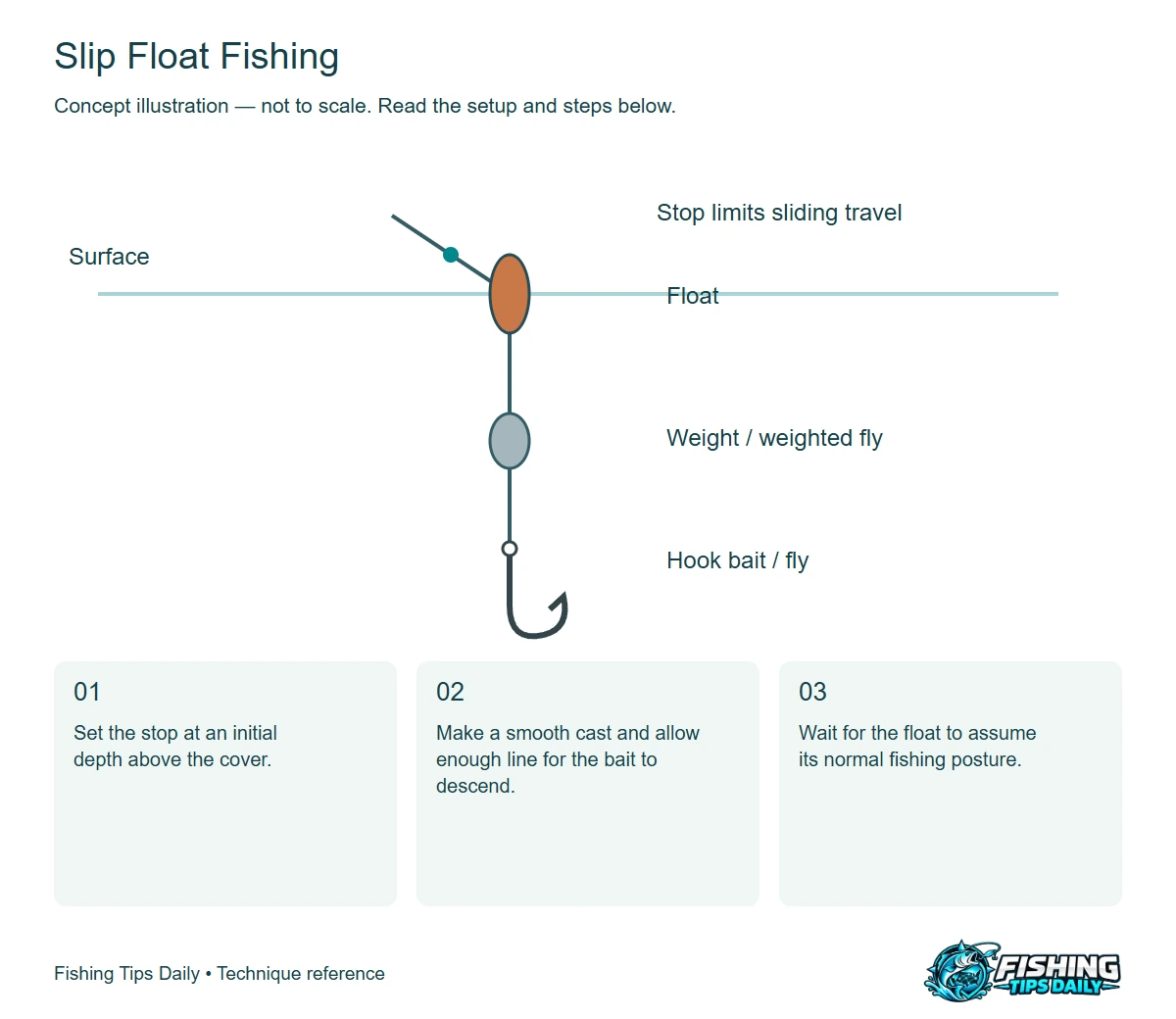
Build a setup that does the job.
Arrange a line stop, suitable bead if needed, sliding float, weight, and hook. The bead must stop at the knot rather than pass over it. Balance the weight to the float’s carrying capacity.
Make the first test close enough to observe. Check the connection, the hook opening, and whether the offering follows the intended path. Correct a fouled or poorly balanced setup before adding distance.
How to fish it, step by step.
- Set the stop at an initial depth above the cover.
- Confirm that line slides through the float and the stop catches correctly.
- Make a smooth cast and allow enough line for the bait to descend.
- Wait for the float to assume its normal fishing posture.
- Adjust the stop in small increments until bites reveal the useful level.
A useful first test.
For crappie suspended over timber, start shallow of the highest branches. Move the stop a little at a time and record the successful setting; do not lower straight into the wood to find bottom.
Keep the productive detail repeatable: position, depth, speed, or pause. Change one of those at a time so you can tell what improved the presentation.
Variations—and what changes.
Slip floats can hold live bait or a small jig. A stop setting is a line distance, not guaranteed vertical depth in strong wind or current.
Read the symptom before changing everything.
Float never sets
Check a stuck stop, insufficient weight, tangled line, or bait resting on cover.
Depth changes unexpectedly
Inspect a slipping stop and reset it against the measured reference.
Know when to change methods.
If the offering cannot reach the target, repeatedly snags, or demands equipment you cannot control comfortably, choose another presentation from this family. Keep the location clue you learned; changing a rig does not require starting the whole search over.
Use tackle and bait permitted on the water, and plan safe access and fish handling. The illustrations explain concepts; they do not replace equipment instructions or current local rules.