
Ice Fishing Presentations
Ice fishing presents through a small opening, making depth and subtle movement especially important. This is a presentation guide, not a test of whether ice is safe.
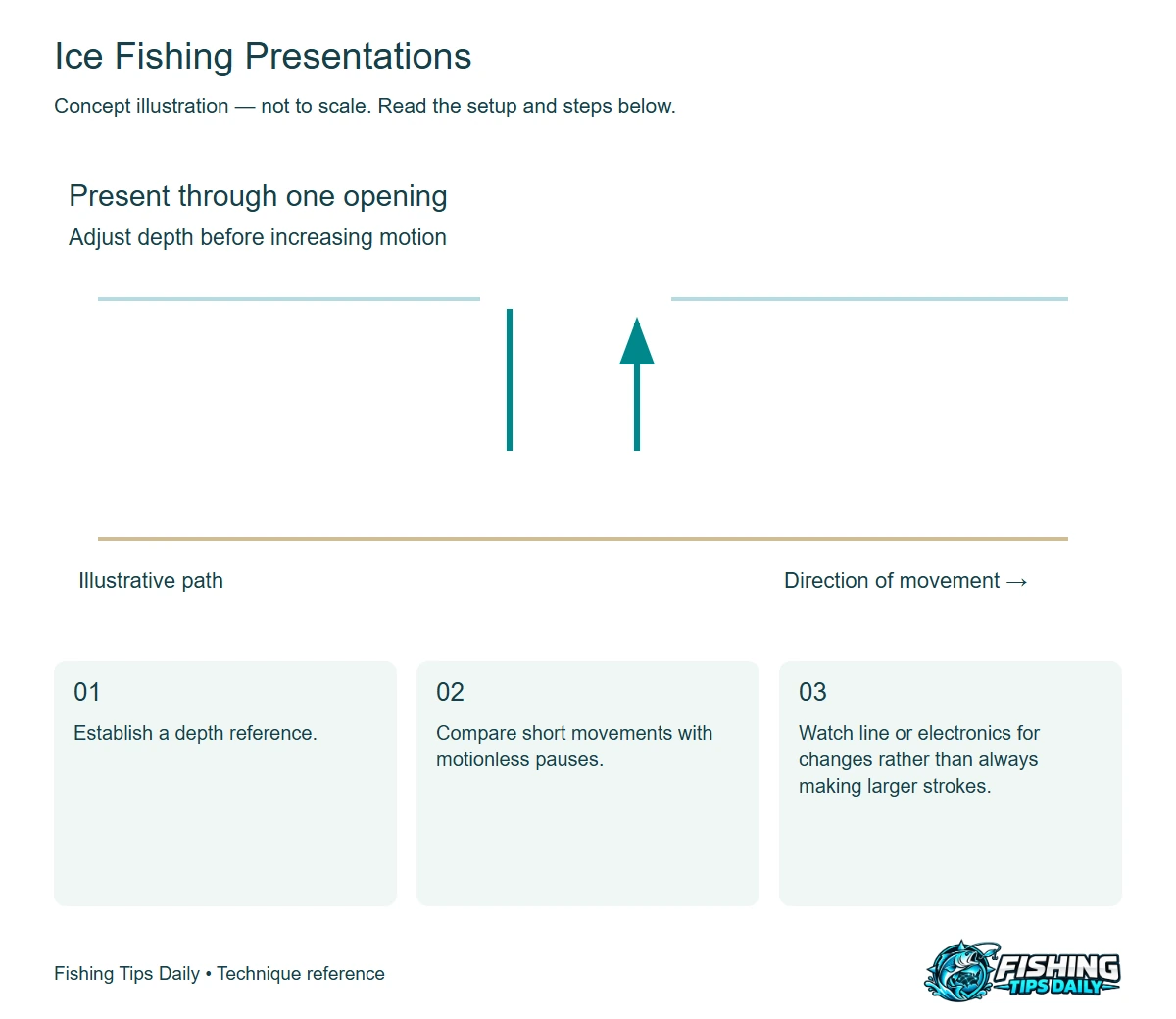
Build a setup that does the job.
Once access is independently judged suitable, use appropriate ice equipment, line, and a small jig or lure matched to the target. Keep hooks and line clear of the hole edge and organize tools before fishing.
Make the first test close enough to observe. Check the connection, the hook opening, and whether the offering follows the intended path. Correct a fouled or poorly balanced setup before adding distance.
How to fish it, step by step.
- Establish a depth reference.
- Lower the offering above the expected fish level.
- Compare short movements with motionless pauses.
- Watch line or electronics for changes rather than always making larger strokes.
- Adjust depth in small increments and record the level producing bites.
A useful first test.
For suspended panfish, start above the marks and lower gradually. A fish rising toward the lure is useful feedback; dropping below it can remove the offering from view.
Keep the productive detail repeatable: position, depth, speed, or pause. Change one of those at a time so you can tell what improved the presentation.
Variations—and what changes.
Small jigs, spoons, dead-sticks, and permitted set lines use different motions. Local line-count and unattended-line rules still apply.
Read the symptom before changing everything.
Fish inspect but do not bite
Reduce movement or profile before making a large depth change.
Line catches the hole edge
Improve rod position and protect it from abrasion.
Know when to change methods.
If the offering cannot reach the target, repeatedly snags, or demands equipment you cannot control comfortably, choose another presentation from this family. Keep the location clue you learned; changing a rig does not require starting the whole search over.
Use tackle and bait permitted on the water, and plan safe access and fish handling. The illustrations explain concepts; they do not replace equipment instructions or current local rules.