
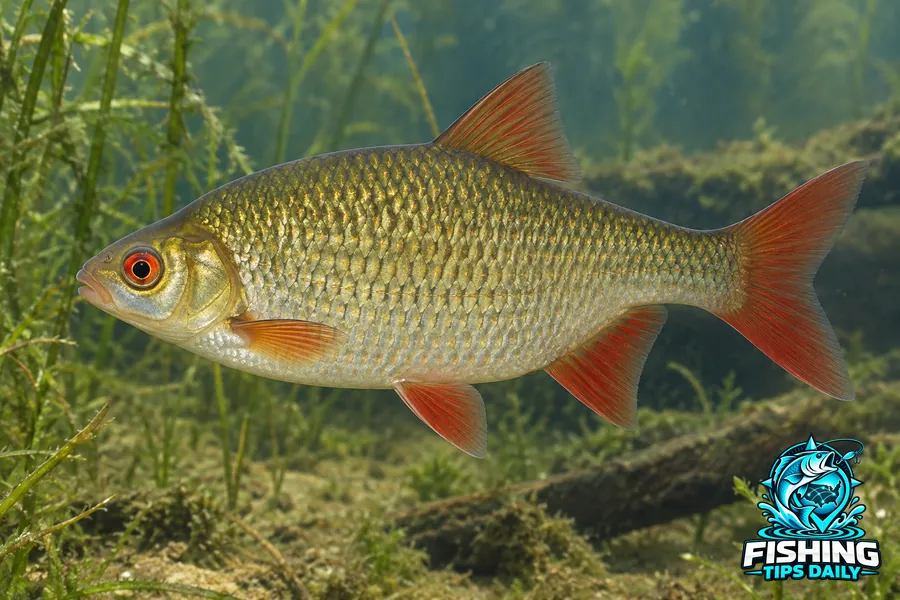
Range and Identity
The Rudd identity should remain separate from the true roaches and from similarly named North American minnows. Native distribution centers on Europe and neighboring western Asian basins, with introductions elsewhere. An introduced population is not evidence that the species naturally occupied that drainage.
Habitat and Behavior
Adults use nutrient-rich lowland rivers, backwaters, oxbows, ponds and lakes with abundant vegetation. Plants provide habitat as well as a surface for spawning. A fish seen among weeds is not necessarily feeding on those particular plants at the moment of observation.
Food and Life History
Foods include plankton, terrestrial insects and plant material. Sticky eggs attach to roots or submerged plants in shallow water. The female upper length reference is retained, but a zero-valued mass field is rejected as missing information rather than reported as a maximum weight.
Field Note
Keep the scientific identity with the Pearl Roach label. It prevents a regional common name from confusing Rudd with a different roach species.
All Lakes With Pearl Roach
Browse lakes and reservoirs with documented Pearl Roach records, listed alphabetically. Records do not establish current abundance or public access. Check the evidence and managing authority for the water you choose.
Showing 1–4 of 4 lakes · Page 1 of 1
- Horseshoe Lake Walworth, SD
- Lake Alice Deuel, SD
- Pactola Reservoir Pennington, SD
- Sheridan Lake Pennington, SD