
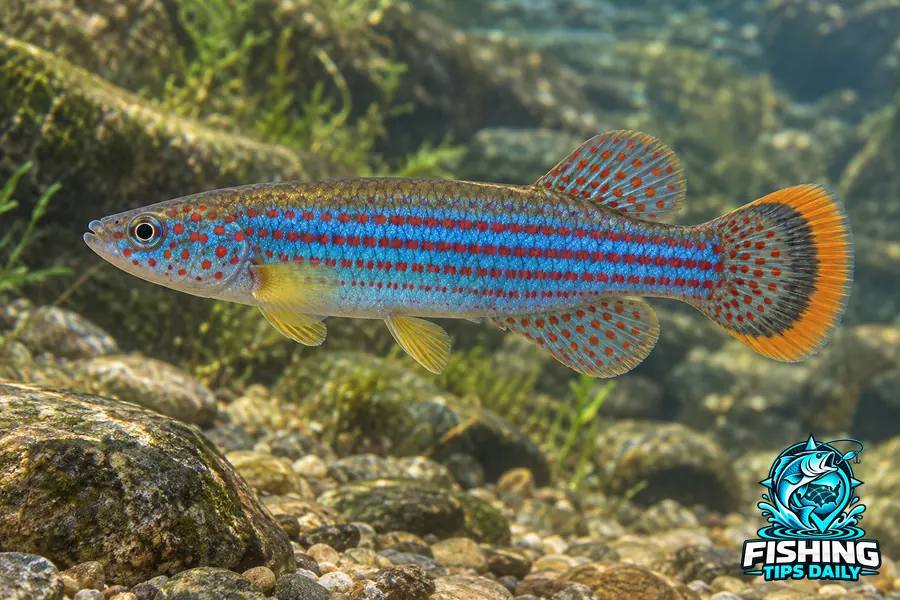
Range and Identity
Fundulus catenatus occurs in interior United States drainage systems, including parts of the Tennessee and Cumberland region and other Mississippi basin tributaries. Locality is useful because several studfishes have similar names. A general killifish label does not establish which species a stream record represents.
Habitat and Behavior
Adults use clear shallow areas with rock or sand, including quiet backwaters near flowing habitat. The relationship between the main channel and its protected margins is worth recording. A creek can provide both rapid water and sheltered feeding areas within a short distance.
Food and Life History
Aquatic insect larvae and snails are recorded foods. The species is not an annual killifish whose normal life cycle requires seasonal drying. The compiled maximum is twenty centimeters total length, with a common reference of 16.5 centimeters. A maximum mass is not estimated from these lengths.
Field Note
Record whether the fish occupied the channel or a sheltered margin. The small-scale position helps describe habitat more accurately than the stream name alone.
All Lakes With Northern Studfish
Browse lakes and reservoirs with documented Northern Studfish records, listed alphabetically. Records do not establish current abundance or public access. Check the evidence and managing authority for the water you choose.
No published lakes are currently linked to this species in our confirmed records.