
Interior Freshwater Range
The distribution includes Great Lakes, Mississippi-basin and Ozark-region waters. A precise drainage helps place records within this broad interior range. Its small size should not be used to identify every tiny bottom fish as Least Darter.
Plants and Feeding
Fish use quiet areas with vegetation over mud or sand. Recorded foods include insect larvae, isopods and copepods. These small prey and sheltered conditions differ from the exposed fast-riffle setting often associated with larger stream darters.
Eggs and Length
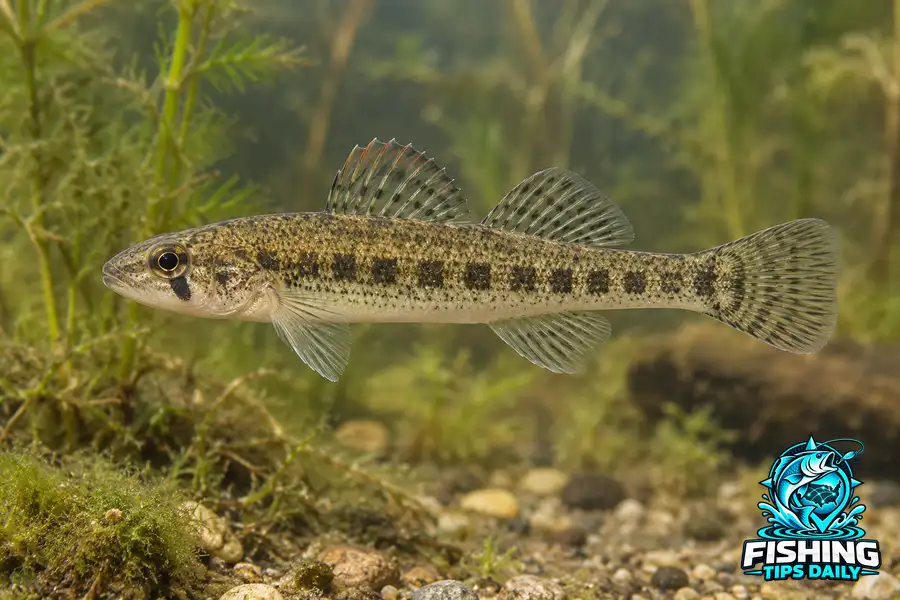
Eggs adhere to vegetation and develop without parental guarding. The compiled maximum is 4.4 centimeters total length, with a common reference of 3.1 centimeters. An enlarged photograph showing the complete fish and fins can preserve identification details that are difficult to see at natural scale.
Keep Plant Cover in the Record
Vegetation serves as habitat and an egg-attachment surface. Record it alongside substrate and current when describing a Least Darter locality.
All Lakes With Least Darter
Browse lakes and reservoirs with documented Least Darter records, listed alphabetically. Records do not establish current abundance or public access. Check the evidence and managing authority for the water you choose.
Showing 1–24 of 250 lakes · Page 1 of 11
- Amelia Lake Pope, MN
- Au Sable Lake Ogemaw, MI
- Avery Lake Montmorency, MI
- Baby Lake Cass, MN
- Ball Bluff Lake Aitkin, MN
- Ball Club Lake Itasca, MN
- Bankers Lake Hillsdale, MI
- Bass Lake Menominee, MI
- Bass Lake Cass, MN
- Bass Lake Crow Wing, MN
- Baw Beese Lake Hillsdale, MI
- Bear Lake Hillsdale, MI
- Beauty Lake Todd, MN
- Benedict Lake Hubbard, MN
- Big Birch Lake Todd, MN
- Big Birch Lake Todd, MN
- Big Bradford Lake Otsego, MI
- Big Carnelian Lake Washington, MN
- Big Chub Lake Otsego, MI
- Big Fish Lake Stearns, MN
- Big Kandiyohi Lake Kandiyohi, MN
- Big Lake Stearns, MN
- Big Swan Lake Todd, MN
- Big Trout Lake Crow Wing, MN