
Recognition History
Early specimens collected in 1976 were later examined in a university fish collection. Their resemblance to Southern Redbelly Dace had obscured the distinction. Subsequent breeding-color observations helped confirm the separate identity now named Chrosomus saylori.
Covered Stream Pools
Fish occupy rocky pools in headwaters and creeks, often beneath undercut banks or around large rocks. The federal account identifies streams in Bledsoe and Rhea counties. These specific localities should not be expanded to every stream in the broader Tennessee basin.
Color and Length
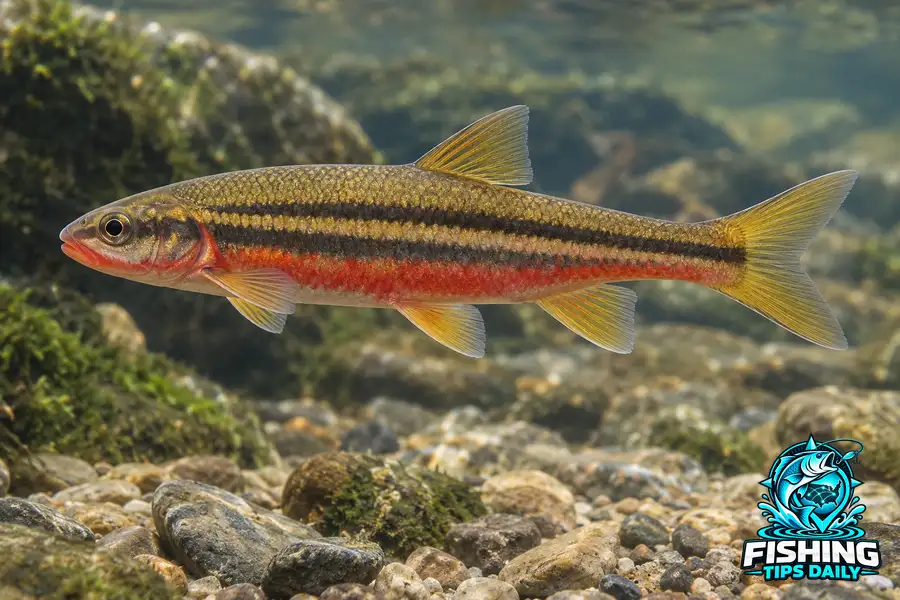
Breeding males develop black coloration beneath the head, a useful comparison with the similar species. The compiled maximum is 7.4 centimeters total length. Nonbreeding photographs may lack the conspicuous breeding cue, making locality and other diagnostic details particularly important.
Breeding Condition Changes the Comparison
A subdued nonbreeding fish can be harder to distinguish. Preserve the season and locality rather than expecting every image to show breeding colors.
All Lakes With Laurel Dace
Browse lakes and reservoirs with documented Laurel Dace records, listed alphabetically. Records do not establish current abundance or public access. Check the evidence and managing authority for the water you choose.
No published lakes are currently linked to this species in our confirmed records.