
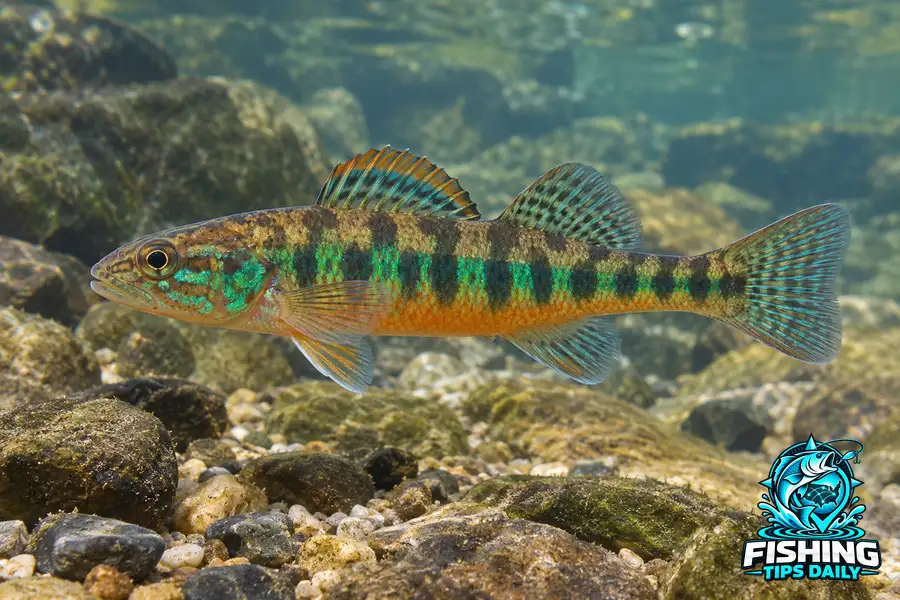
Drainage Range
The species occurs in Kentucky and northeastern Tennessee within its documented river systems. The name Emerald does not indicate a broad distribution across all green-colored darters. Drainage information is particularly useful in this species-rich region.
Habitat
Rocky pools are a characteristic setting, although individuals also occur in riffles. A stream can contain both habitat types within a short distance. Describing the actual occupied section is more informative than assigning the fish one generic fast-water label.
Food and Size
Midge larvae and pupae, caddisfly larvae, mayfly nymphs and small crustaceans are reported foods. The reference maximum is 5.6 centimeters total length. Its small size connects it with tiny bottom-associated prey that can be overlooked in a casual view of the stream.
Keep Pool and Riffle Records
Both can be relevant to Emerald Darter. The local arrangement of rocks, current and quiet water helps explain a stream observation.
All Lakes With Emerald Darter
Browse lakes and reservoirs with documented Emerald Darter records, listed alphabetically. Records do not establish current abundance or public access. Check the evidence and managing authority for the water you choose.
No published lakes are currently linked to this species in our confirmed records.