
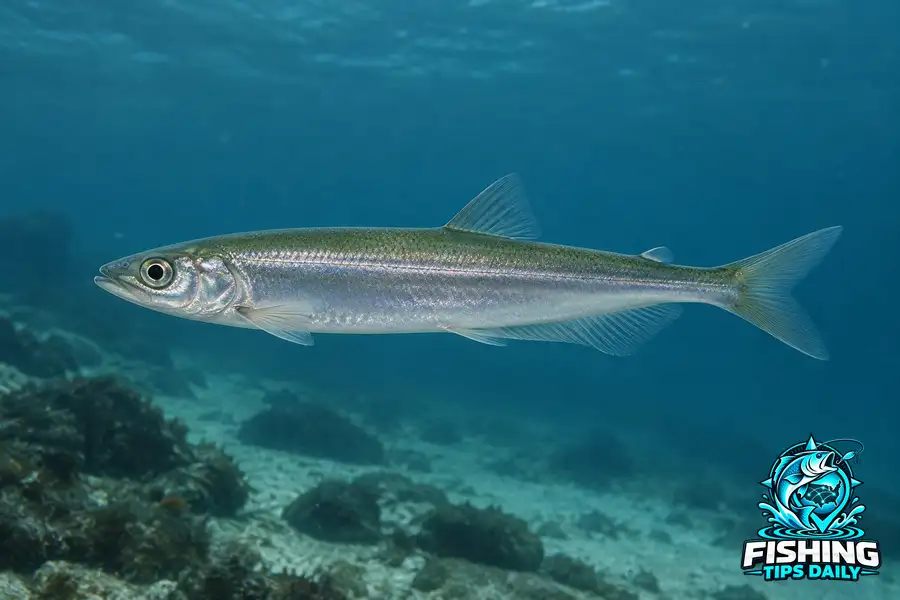
Identification
The body is slender and silvery with a pointed snout, projecting lower jaw and small adipose fin behind the main dorsal fin. Spawning males develop prominent scale ridges and larger paired fins.
Size and Species Scope
The broad reference maxima differ from the usual mature Atlantic range. Older publications combined Atlantic and Pacific capelin, so the listed species name should accompany size records. Atlantic Capelin is distinct from Pacific Capelin, Mallotus catervarius.
Food Web
Capelin feeds on zooplankton, including small crustaceans. Cod, seabirds and marine mammals in turn consume capelin, connecting plankton production to much larger animals.
Spawning and Fisheries
Some stocks spawn on sand or fine gravel beaches; others reproduce offshore. Eggs adhere to the bottom. Spawning mortality can be high, particularly among beach-spawning males. Commercial fisheries use nets, and local harvest rules should be checked before collecting fish during a run.
Beach Runs Are Only One Strategy
The famous rolling fish at the shoreline show one form of capelin spawning. Offshore spawning is also part of the Atlantic species’ life history.
All Lakes With Capelin
Browse lakes and reservoirs with documented Capelin records, listed alphabetically. Records do not establish current abundance or public access. Check the evidence and managing authority for the water you choose.
No published lakes are currently linked to this species in our confirmed records.