
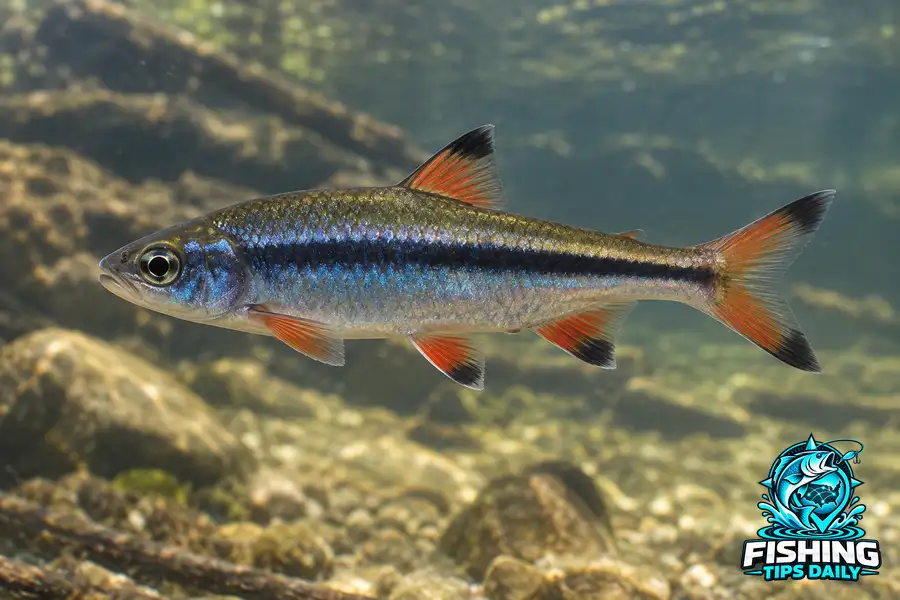
Identification
Dark pigment forms a tapering wedge across the dorsal and anal fins. The pelvic fins are darker toward the front and become clearer behind. These details matter because its appearance approaches that of Pretty Shiner and Cherryfin Shiner; small fish can also resemble unrelated shiners.
Size and Weight
The published maximum total length is 6.5 cm, approximately 2.6 inches. A common length is 4.1 cm, about 1.6 inches. No dependable maximum individual body weight was located. A length-based estimate would not be equivalent to a measured maximum.
Habitat and Range
Its southeastern range includes the Escambia, Yellow, Choctawhatchee and Apalachicola drainages. Alabama observations emphasize deeper pools and its relative scarcity in long, shallow stream stretches. A drainage-wide record does not mean it occurs in every tributary or impoundment.
Natural Food and Fishing Context
Drifting terrestrial and aquatic insects are proposed foods in the regional account, but that account treats the diet as incompletely known. It therefore does not support a confident best-bait claim. Egg-bearing females collected between May and July provide seasonal evidence without resolving all details of spawning behavior.
The Shape of the Dark Patch Matters
Instead of treating every dark-finned minnow as the same fish, examine how the pigment tapers across the fin. This wedge pattern offers a more useful clue than a general impression of black fins.
All Lakes With Blacktip Shiner
Browse all lakes and reservoirs with confirmed Blacktip Shiner records in our database, listed alphabetically.
No published lakes are currently linked to this species in our confirmed records.