
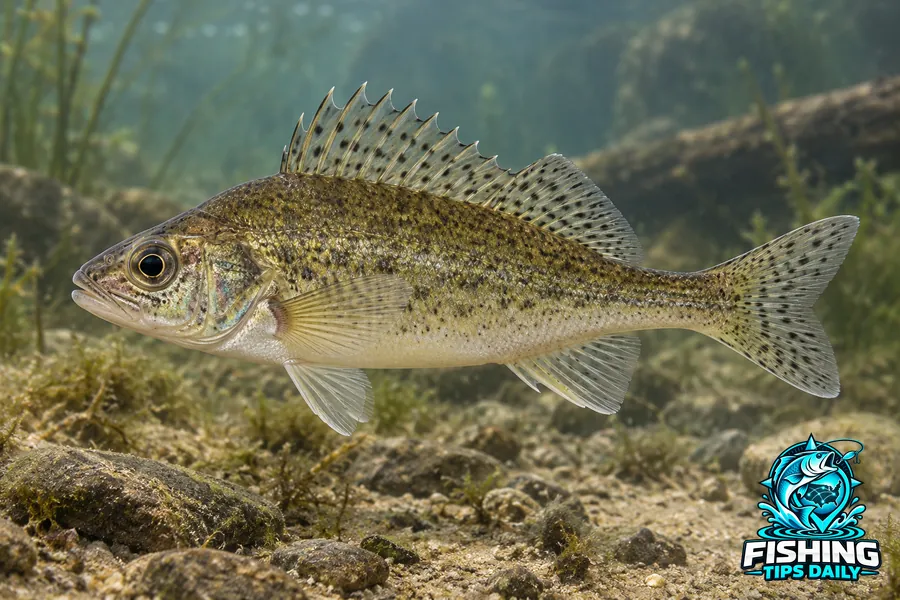
Range and Identity
Gymnocephalus cernuus is the identity retained for Ruffe. Introduced populations occur outside its native Eurasian range. A locality should preserve that distinction, especially where ecological effects differ from those in the original basin. Similar perch-like appearance alone does not establish a Ruffe identification.
Habitat and Behavior
Adults use productive lakes, reservoirs and slow river or estuarine settings. Soft bottoms and deeper sand or gravel areas are reported. Sensory structures on the head support prey detection in darkness, explaining how feeding can continue when visual conditions are poor.
Food and Life History
Upper references are twenty-nine centimeters total length and four hundred grams. Foods include small planktonic animals and bottom invertebrates. Eggs become adhesive and attach to stones or vegetation, with females capable of more than one spawning episode during a season.
Field Note
Retain native or introduced context with the waterbody. The fish’s identity and behavior remain important, but the population’s origin adds a different kind of ecological information.
All Lakes With Ruffe
Browse lakes and reservoirs with documented Ruffe records, listed alphabetically. Records do not establish current abundance or public access. Check the evidence and managing authority for the water you choose.
Showing 1–1 of 1 lakes · Page 1 of 1
- Lake Huron Alcona, MI