
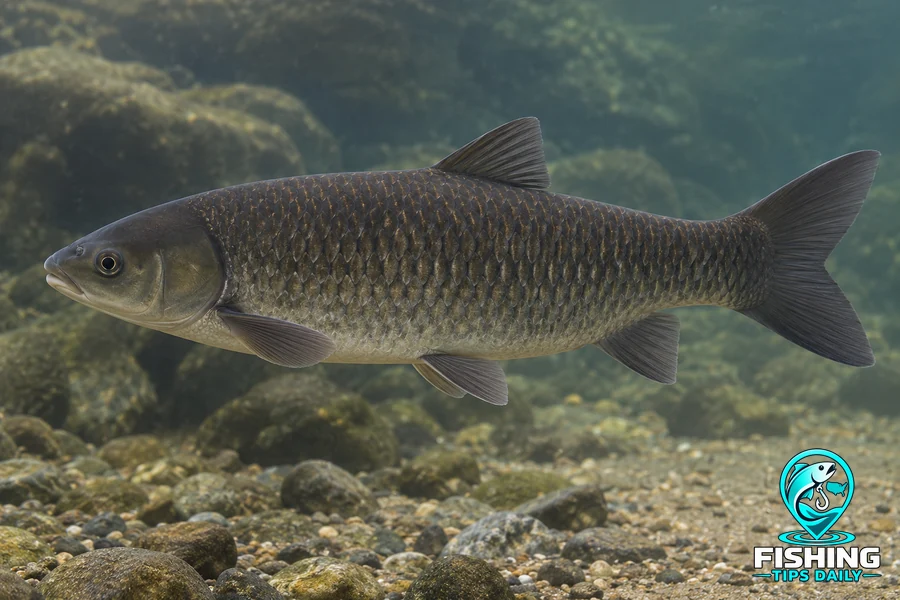
Identification
Black Carp resembles Grass Carp in overall shape, but its feeding apparatus is very different. Broad, molar-like teeth in the throat are adapted to crushing shells. Color alone is insufficient to identify a dark carp reliably.
Size and Weight
The published maximum total length is 180 cm, nearly 5 feet 11 inches. The updated weight summary reports 73.5 kg, about 162 pounds. These separate limits describe exceptionally large fish, not an expected catch size.
Habitat and Natural Food
Adults inhabit lowland rivers and lakes. Young begin with small plankton and insects before shifting toward snails and clams as they grow. This dietary change helps explain why large fish can affect native mollusk populations.
Fishing and Reporting
In U.S. waters where Black Carp is introduced, a suspected catch is valuable information for fisheries staff. Photograph the fish clearly and follow local reporting and handling instructions. Its established diet does not justify moving live mollusks between waters for bait.
A Shell-Crushing Specialist
The heavy feeding teeth sit in the throat rather than along the visible mouth edge. They distinguish the feeding role of Black Carp from the plant-eating role associated with Grass Carp, despite a superficially similar body shape.
All Lakes With Black Carp
Browse lakes and reservoirs with documented Black Carp records, listed alphabetically. Records do not establish current abundance or public access. Check the evidence and managing authority for the water you choose.
Showing 1–3 of 3 lakes · Page 1 of 1
- Desoto Lake Phillips, AR
- Lake Barkley Trigg, KY
- Lake Barkley Montgomery, TN