
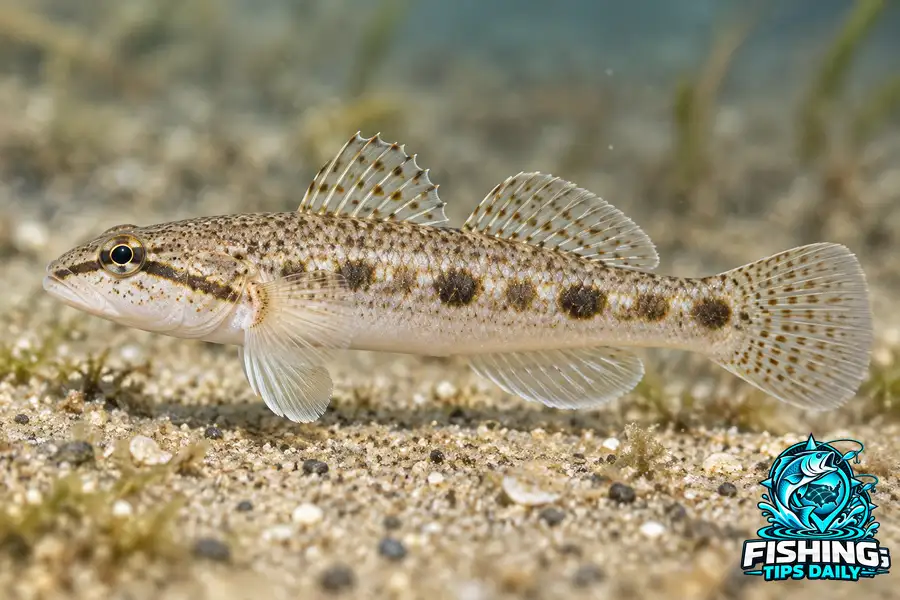
Identification
The scientific name Favonigobius gymnauchen anchors this profile. Several small gobies share sandy coastal habitat, so location alone cannot establish an identification. A clear side photograph and visible fin details are more useful than the broad common name sand goby.
Size and Weight
The reported maximum total length is 13.4 cm, about 5.3 inches with the tail included. A dependable maximum weight was not verified. Length–weight equations estimate mass and are not a substitute for a measured maximum.
Habitat and Natural Food
A Hiroshima Bay study compared fish from a sandy beach, an estuary and seagrass. Copepods, gammarid crustaceans and polychaete worms contributed to the diet. Habitat use varied: the estuary held the highest density in that study, while the sandy beach held the lowest.
Fishing and Observation
Those prey records describe natural feeding rather than a tested bait recommendation. This profile does not assign a best lure to the species. The Japanese habitat comparison also cannot establish which waters elsewhere hold its largest population.
More Than a Sandy Beach Fish
Despite its common name, this goby also uses estuarine sediment and seagrass. The Hiroshima Bay comparison shows why a coastal fish’s habitat should not be reduced to one bottom type: adjacent environments can differ in both fish density and food.
All Lakes With Asian Sand Goby
Browse all lakes and reservoirs with confirmed Asian Sand Goby records in our database, listed alphabetically.
No published lakes are currently linked to this species in our confirmed records.