
Identification
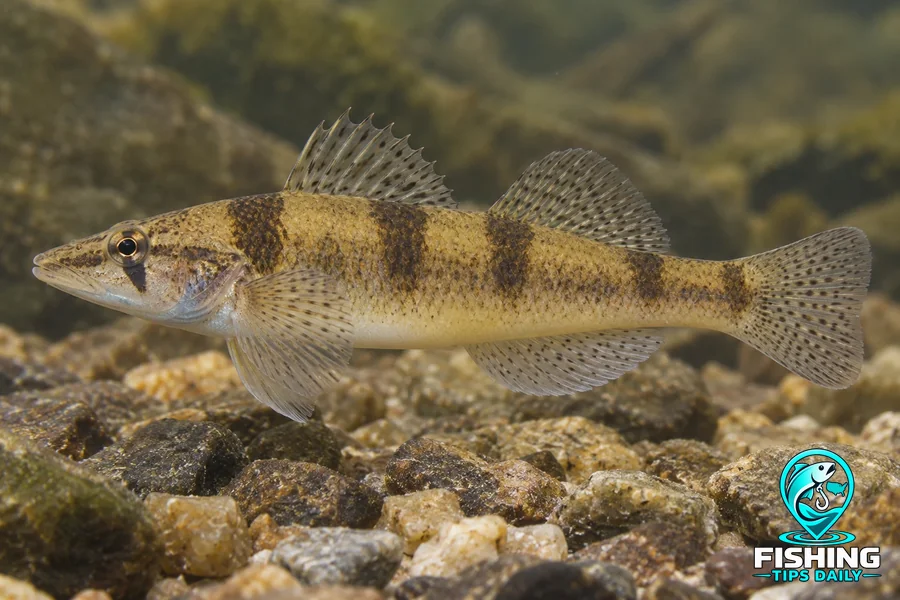
A slender body, pointed snout and dark mark below the eye are useful clues. Four darker saddle-like patches cross the back against a lighter brown or amber background.
The pattern is important when distinguishing this fish from other small darters. Exact identity still requires care, particularly when a photograph shows only part of the body.
Habitat and Natural Food
Amber Darters occupy flowing shoals in the Conasauga and Etowah systems. Gravel, cobble and clean current are characteristic features; heavily silted areas are less suitable.
Their prey includes snails, limpets and immature aquatic insects. Riverweed can occur in their shoal habitat and contributes to the structure of the stream community.
Size and Weight
A reported adult-size range is 45–75 millimeters, roughly 1.8–3 inches. Another account reports a maximum standard length of 63 millimeters; standard length excludes the tail, so these figures should not be treated as equivalent measurements.
A dependable typical weight was not established.
Conservation and Observation
Amber Darters are federally endangered. This profile provides recognition and natural-history information without recreational bait or capture instructions.
Maintaining suitable flow and clean streambed habitat matters to recovery. A general river record does not mean the fish occupies every pool or tributary.
A Fish That Blends Into the Shoal
The alternating light body and dark saddles help the fish blend with the streambed. Amber Darters also burrow into loose sand or gravel, possibly as a way to avoid predators. That explanation remains a proposed function rather than a proven motive for every observation.
All Lakes With Amber Darter
Browse all lakes and reservoirs with confirmed Amber Darter records in our database, listed alphabetically.
No published lakes are currently linked to this species in our confirmed records.