
Identification
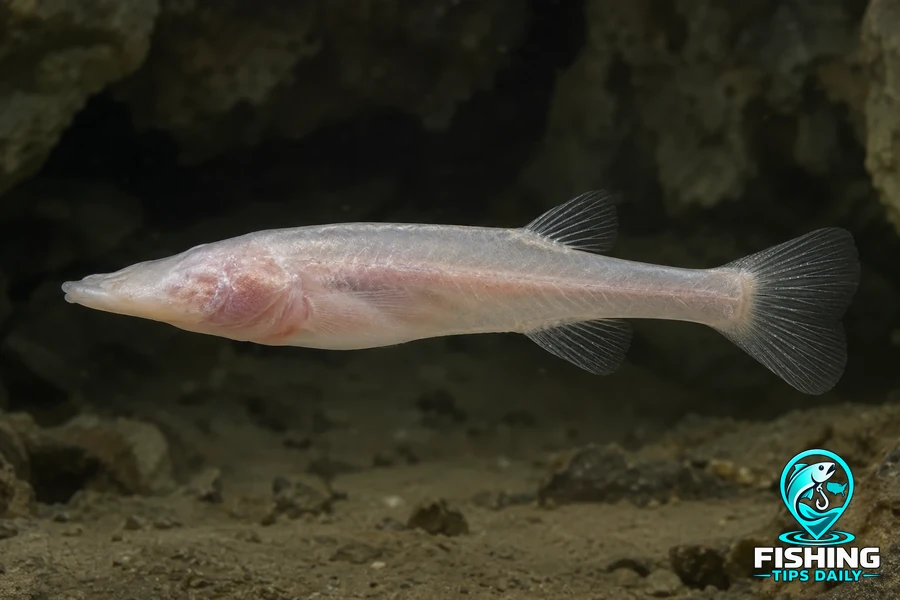
The elongated, flattened head narrows toward the snout. Eyes are absent, pigmentation is minimal and there are no pelvic fins. Sensory structures are conspicuous on the head and body.
These features belong to a specialized cave fish. A pale fish seen in surface water should not be assigned this identity on color alone.
Habitat and Natural Food
Its known home is the Key Cave aquifer system. Water quality and groundwater levels matter throughout the recharge area, including land beyond the protected cave entrance.
Bat-derived organic material helps support the underground food web. The exact diet remains incompletely known; small crustaceans and other invertebrates are suspected foods rather than a measured universal menu.
Size and Weight
Adults are reported at approximately 1.2–2.3 inches long, or 30–58 millimeters. This is an adult-size range, not a statement that every mature fish has the same length.
A dependable typical weight was not established for this profile.
Conservation and Observation
Alabama Cavefish are federally endangered. This profile is for learning about the fish, with no recreational capture or bait recommendation.
Protecting groundwater and avoiding disturbance to caves and bat colonies are more relevant than selecting tackle. Important details of reproduction and life history remain uncertain.
A Life Beyond Sunlight
Without vision, this cavefish depends on other senses. Adults have been observed responding to disturbances at the water surface, while sensory structures can help them detect their surroundings. A nearly colorless body and absent eyes reflect life in a habitat without daylight.
All Lakes With Alabama Cavefish
Browse all lakes and reservoirs with confirmed Alabama Cavefish records in our database, listed alphabetically.
No published lakes are currently linked to this species in our confirmed records.