
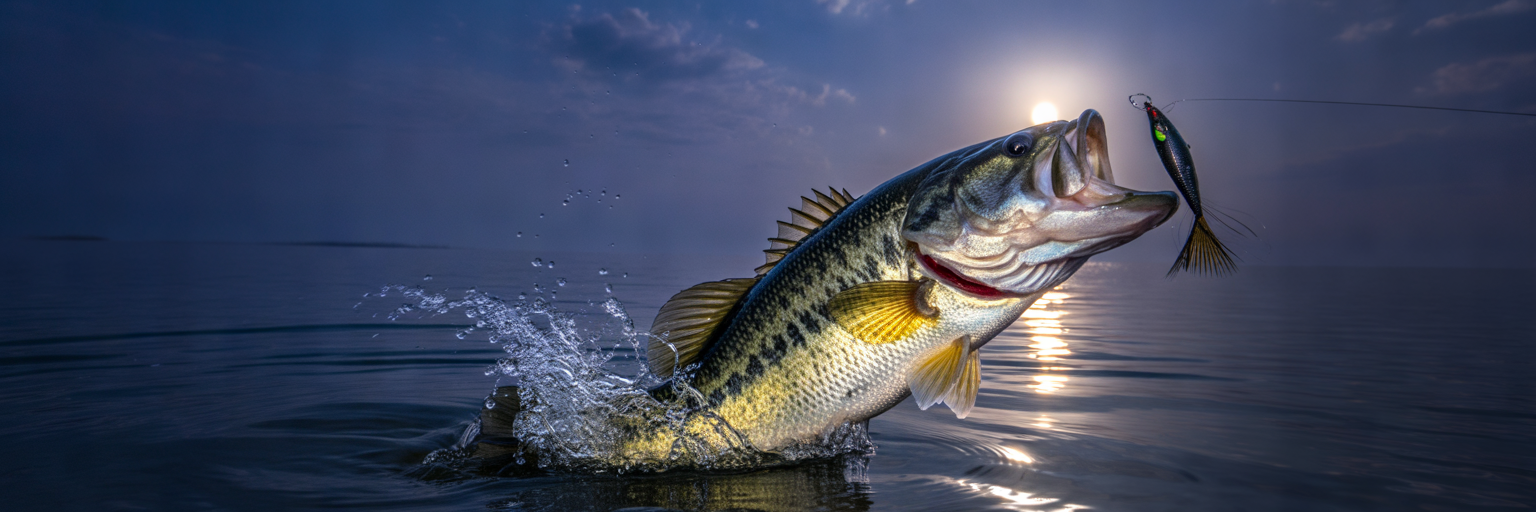
Once the sun dips below the treeline, the lake becomes a different world. The daytime buzz of boats fades, replaced by the hum of insects and the occasional splash in the shallows. For bass, this is more than a change in light. It is a fundamental shift in how they hunt. Understanding how to fish for bass at night means adapting your strategy to match their senses. Bass transition from being primarily visual predators to hunters that rely on sound, vibration, and water displacement detected by their lateral line.
Successful night fishing for largemouth bass hinges on choosing lures that send out strong signals bass can track in the dark. During this time, bass often move from their deeper daytime haunts to shallower banks and flats to feed. This is a game of patience and precision. Your success depends on using the right night bass lures with a slow, methodical presentation in high-percentage areas. It is about making it easy for the fish to find your bait.
Lures That Create Sound and Vibration
When you cannot rely on sight, sound becomes your best friend. The goal is to use lures that create a distinct disturbance, allowing a bass to “hear” its way to your line. These baits send out vibrations that fish can feel from a distance, drawing them in for a closer look. Three types of lures excel at creating this commotion, each with its own unique signature.
A single Colorado blade spinnerbait is a classic for a reason. Its wide, cupped blade produces a deep, rhythmic “thump” as it moves through the water. This slow, steady pulse is incredibly easy for a bass to track on a dark night. Another excellent choice is a buzzbait, especially one with a clacker that adds extra noise. These are some of the most effective topwater lures for night fishing because their gurgling sound calls fish up from below. The key is a retrieve just fast enough to keep the blade churning on the surface.
For a different sound profile, a vibrating jig, often called a chatterbait, is hard to beat. Its blade produces a tight, high-frequency vibration that works well around cover like sparse grass or docks. Each of these lures creates an undeniable signal that leads fish directly to your hook, turning a dark, quiet lake into a productive hunting ground.
| Lure Type | Primary Signal | Best Retrieve Speed | Ideal Conditions |
|---|---|---|---|
| Colorado Spinnerbait | Deep, rhythmic ‘thump’ | Slow and steady | Open water, flats, slow-tapering points |
| Buzzbait | Surface gurgle and splash | Slow enough to stay on top | Calm nights, along weed edges and docks |
| Vibrating Jig | Tight, high-frequency vibration | Slow to medium, with pauses | Around sparse grass, docks, and wood cover |
Baits with a Bold Profile
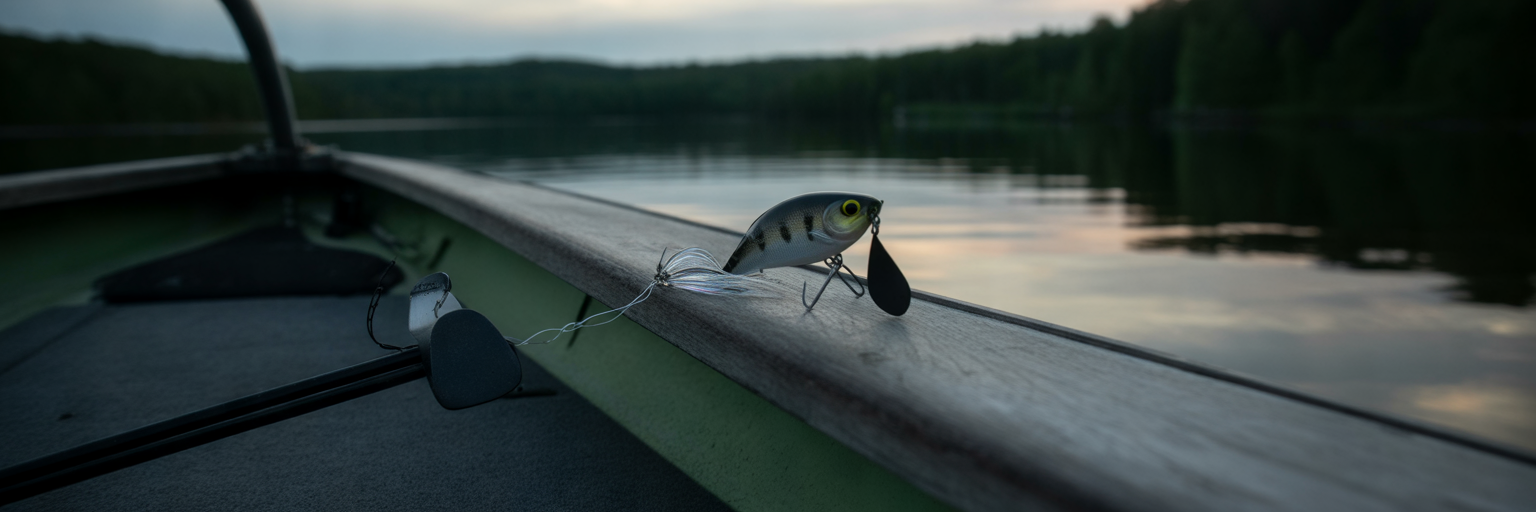
While sound is critical, you should not forget about silhouette. Bass often feed by looking up, and a bulky lure creates a clear shape against the dimly lit night sky or water surface. This is where baits that push a lot of water and present a substantial meal come into play. The focus here is not on noise but on creating a large, unmissable target.
A heavy jig, from 1/2 to 3/4 ounce, paired with a bulky plastic trailer like a craw or creature bait is one of the best lures for night bass fishing. This combination displaces a significant amount of water, and its slow, dragging retrieve mimics a favorite bass meal. As noted by experts at Bassmaster, bass rely heavily on their lateral line to detect water displacement from bulky lures after dark, allowing them to zero in on a meal without needing to see it clearly. Another fantastic option is a large, 10 to 12 inch Texas-rigged plastic worm. Its long, slithering profile creates a subtle but obvious target when dragged slowly across the bottom.
For these profile baits, stick to solid dark colors like black, junebug, or deep purple. These colors create the sharpest and most visible silhouette against the night sky. Choosing the right profile and color is a fundamental skill, and for a complete overview of lure selection for all conditions, our guide on the best lures for bass covers everything you need to know to adapt to any situation.
Targeting High-Percentage Night Spots
Having the right lure is only half the battle. Knowing where to cast it after dark is just as important. The good news is that night fishing does not require finding new, secret spots. It is about understanding how bass reposition themselves on familiar structure to feed under the cover of darkness. Focus your efforts on these three high-percentage areas.
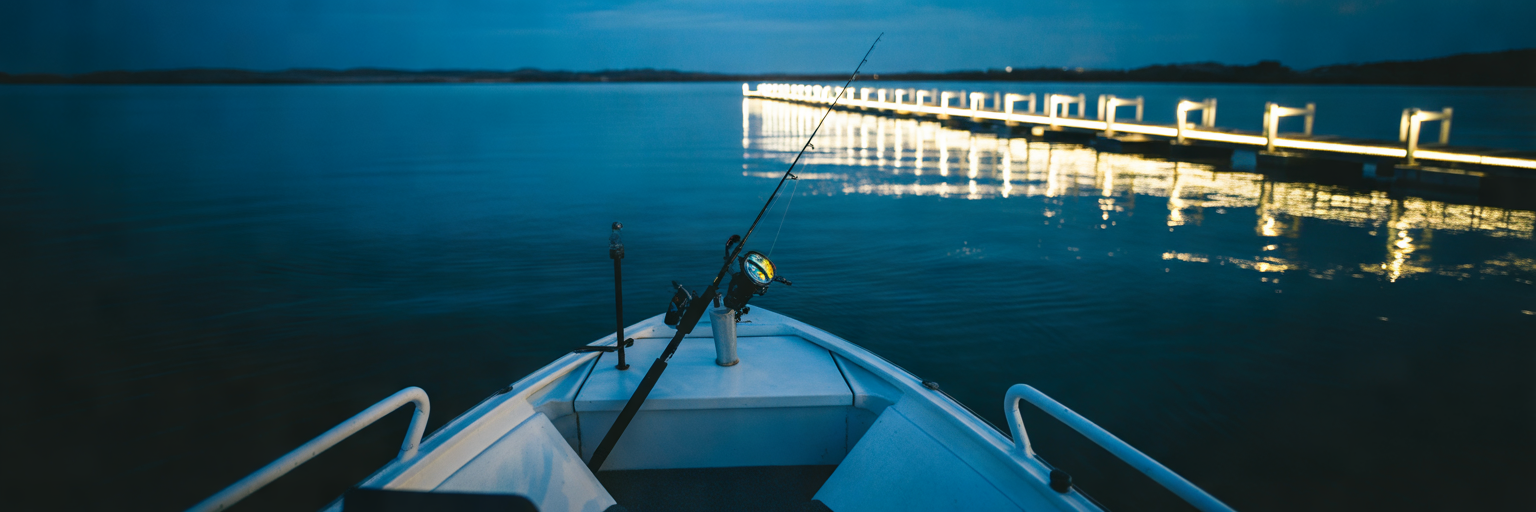
- Artificial Light Sources: Baitfish are naturally drawn to lighted areas like docks, boat ramps, and bridges. Bass use the adjacent shadow lines as perfect ambush points. The trick is to cast your lure past the light and retrieve it through the shadows where the bass are waiting.
- Shallow Structural Features: Hard-bottom areas like riprap banks, main-lake points, and submerged roadbeds become prime feeding grounds at night. Bass patrol these spots looking for crawfish and baitfish. Make repeated, parallel casts along these structures to cover them thoroughly.
- Vegetation Edges: Bass love to patrol the inside edges of weed lines and lily pad fields after sunset. These areas provide cover and are full of prey. Weedless lures like buzzbaits or Texas-rigged worms are perfect for probing these spots without getting snagged.
The key is to fish these areas with confidence and precision. If you need help locating productive lakes or identifying key structures like points and roadbeds in your area, Fishing Tips Daily offers resources to help you plan your next trip. By focusing on these locations, you put your lure right where the fish are actively hunting.
Slow and Steady Retrieves Win the Night
If there is one rule for night fishing, it is this: slow down. A slow, steady retrieve is crucial because it gives a lethargic bass time to locate, track, and eat your lure in the dark. Rushing your presentation is one of the most common mistakes anglers make after sunset. Your retrieve should be deliberate and consistent, allowing the lure to do its job.
For spinnerbaits and buzzbaits, this means a slow, consistent crank just fast enough to make the blades turn. For jigs and worms, a “drag and pause” retrieve is best. Pull the lure a foot or two with your rod, then pause and reel in the slack. Most bites will happen during the pause. One of the most important bass fishing after dark tips is learning what a bite feels like. It is often not a sharp thump like during the day. Instead, you might feel a “mushy” sensation or just a heavy weight on the line. When in doubt, set the hook.
Finally, use the concept of “casting lanes.” Make repeated casts to the same area. This can build a bass’s confidence to strike, as the lure appears to be a persistent intruder or a reliable food source passing by. Patience and a methodical approach will out-fish a fast, erratic one every time.
A Simple and Safe Night Fishing Setup
A successful night on the water is also a safe one. Fumbling with gear in the dark is frustrating and can be dangerous, so it is best to keep your setup simple and be prepared. The best lures for night bass fishing are most effective when paired with a smart, safe approach.
Before you head out, consider these simple steps to make your trip smoother and safer:
- Simplify Your Gear: Bring only two or three pre-rigged rods. This minimizes the need to tie knots or search for tackle in the dark. Have one rod for a topwater lure and another for a bottom-contact bait like a jig.
- Use Heavier Line: Line visibility is not an issue at night, so you can use heavier line. A 17 to 20 pound fluorocarbon or 40 to 50 pound braid provides extra strength and abrasion resistance for pulling big fish from cover.
- Prioritize Safety Equipment: A reliable headlamp is non-negotiable. Look for one with a red-light setting, which helps preserve your night vision. Always wear a life jacket and be sure to tell someone where you are going and when you plan to return.
- Keep Your Area Organized: Whether you are in a boat or on the bank, keep your fishing area tidy. A clean space prevents tripping over tackle boxes, nets, or other gear in the dark.
By preparing your gear and prioritizing safety, you can focus on what matters most: enjoying the peace of the water and catching more fish.