
Snap Jigging
Snap jigging uses short, crisp rod movements to make a suitable lure dart, then settle. Some balanced hard jigs glide sideways and need more clearance than a soft-plastic jighead.
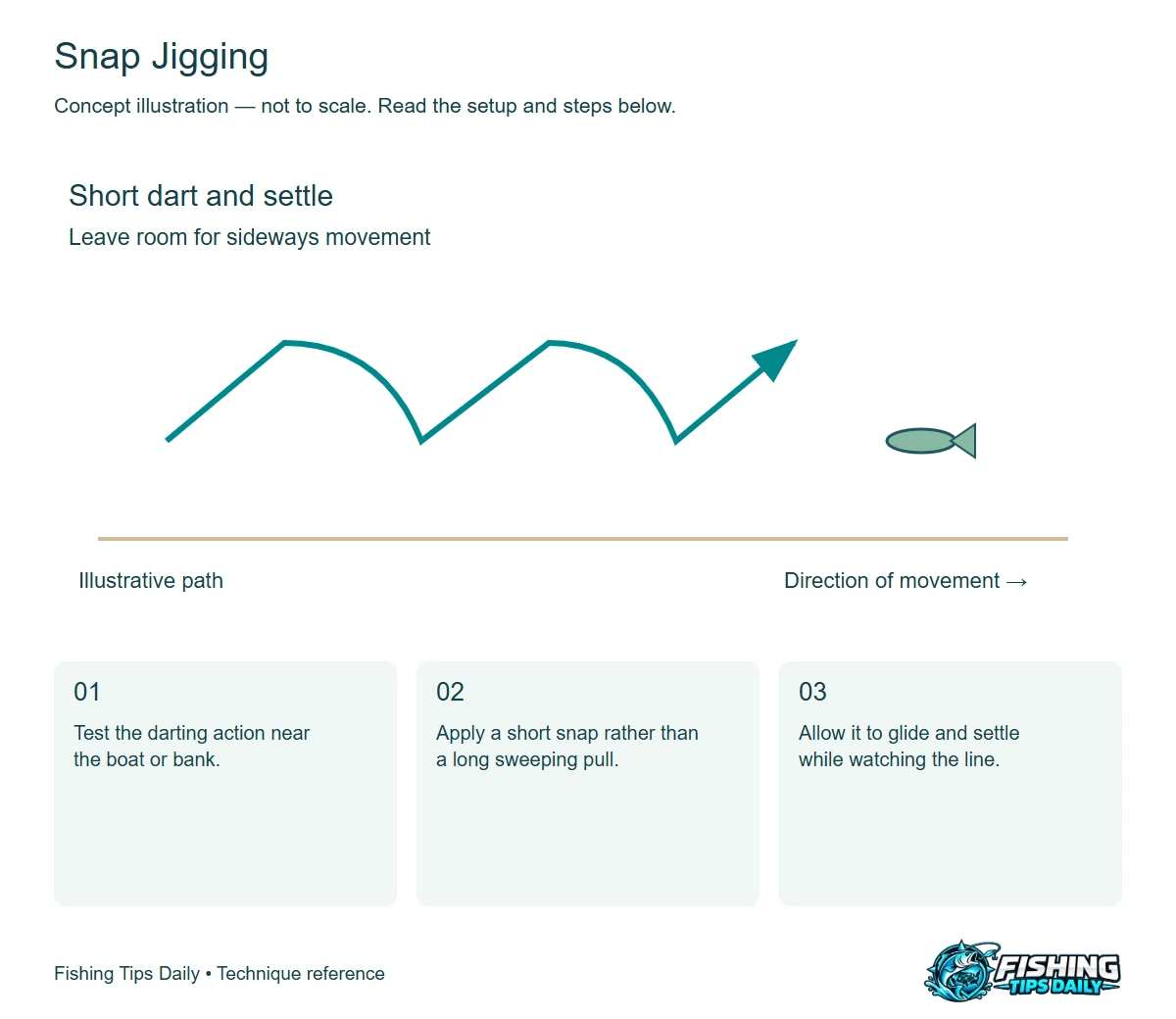
Build a setup that does the job.
Choose a lure designed for darting movement and an outfit matched to its weight. Inspect hooks and line frequently because hard contact and repeated acceleration stress the connection.
Make the first test close enough to observe. Check the connection, the hook opening, and whether the offering follows the intended path. Correct a fouled or poorly balanced setup before adding distance.
How to fish it, step by step.
- Test the darting action near the boat or bank.
- Let the lure reach the target band under control.
- Apply a short snap rather than a long sweeping pull.
- Allow it to glide and settle while watching the line.
- Reset depth as you move, and reduce the motion if it continually fouls.
A useful first test.
Over gravel, make a short dart followed by a settling pause. If the lure repeatedly tangles with its own line, shorten the snap and avoid dumping slack directly over it.
Keep the productive detail repeatable: position, depth, speed, or pause. Change one of those at a time so you can tell what improved the presentation.
Variations—and what changes.
Balanced hard jigs and jighead plastics do not share identical travel paths. Start with the maker’s intended movement and adjust to the clearance available.
Read the symptom before changing everything.
Hook catches the line
Reduce excess slack and make a smaller movement.
Lure leaves the zone
Shorten lifts and recheck depth instead of accelerating every stroke.
Know when to change methods.
If the offering cannot reach the target, repeatedly snags, or demands equipment you cannot control comfortably, choose another presentation from this family. Keep the location clue you learned; changing a rig does not require starting the whole search over.
Use tackle and bait permitted on the water, and plan safe access and fish handling. The illustrations explain concepts; they do not replace equipment instructions or current local rules.