
Jig Fishing
A jig combines a weighted hook with a dressing, plastic, or bait. The weight gives depth control, but the head shape, hook, and body decide whether it swims, falls, drags, or works vertically.
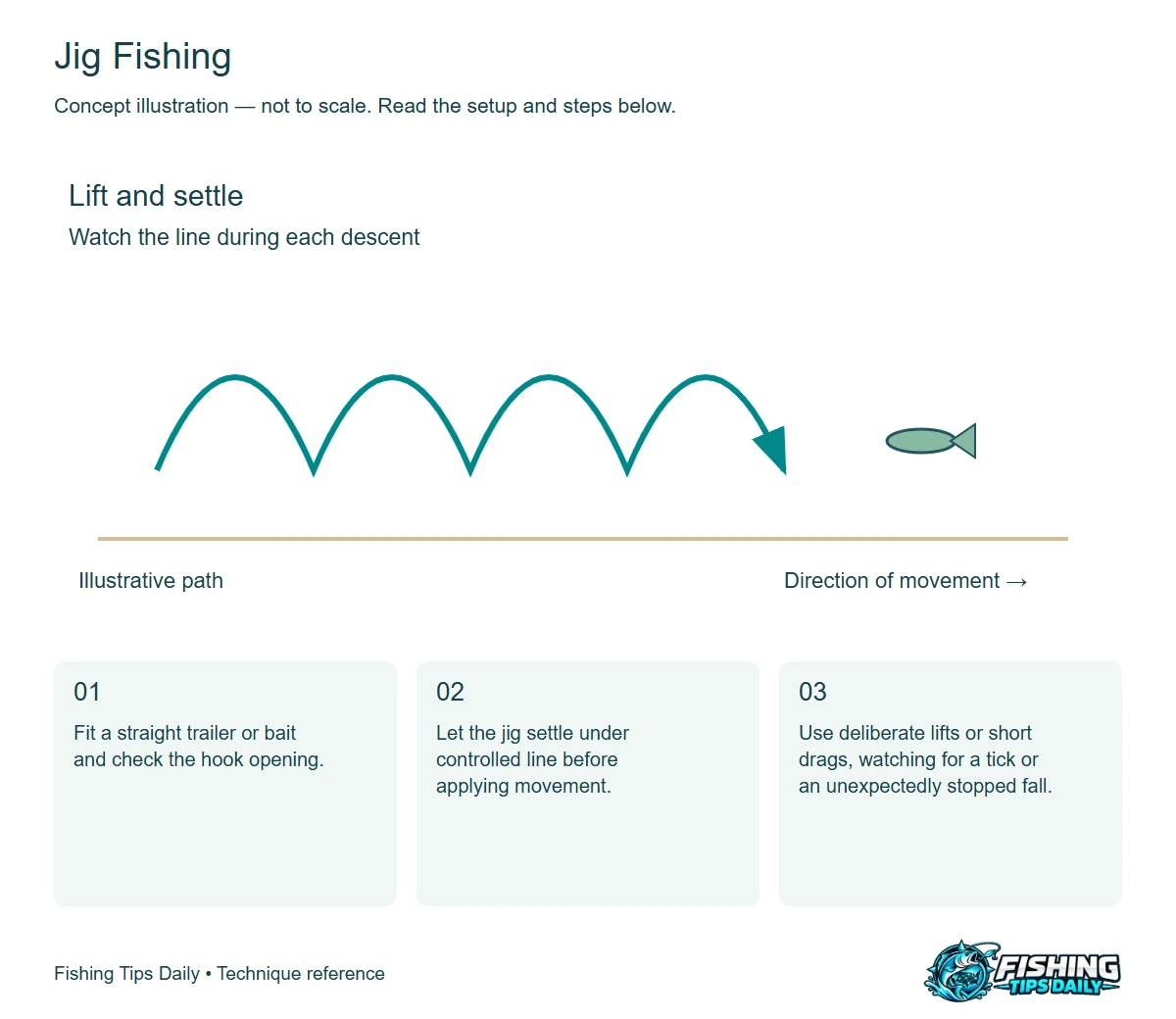
Build a setup that does the job.
Pick a head weight that lets you feel or observe the intended zone. Match hook wire to the rod and line. A thick bass hook and a fine crappie hook need different pressure.
Make the first test close enough to observe. Check the connection, the hook opening, and whether the offering follows the intended path. Correct a fouled or poorly balanced setup before adding distance.
How to fish it, step by step.
- Fit a straight trailer or bait and check the hook opening.
- Choose a cast, vertical drop, or swimming pass based on fish position.
- Let the jig settle under controlled line before applying movement.
- Use deliberate lifts or short drags, watching for a tick or an unexpectedly stopped fall.
- Reel up slack before setting; use pressure appropriate to the hook and fish.
A useful first test.
When crappie suspend above brush, a heavy jig dragged through the branches is the wrong job. Hold a lighter jig above the obstruction and compare small depth changes.
Keep the productive detail repeatable: position, depth, speed, or pause. Change one of those at a time so you can tell what improved the presentation.
Variations—and what changes.
Vertical, swimming, stroking, snap jigging, and jig-and-minnow methods live in the jigging family. Football, casting, and swim heads suit different travel paths.
Read the symptom before changing everything.
No sense of depth
Check line bow and wind before increasing head weight.
Every lift catches bottom
Shorten the pause or lift earlier; change head shape if it continually wedges.
Know when to change methods.
If the offering cannot reach the target, repeatedly snags, or demands equipment you cannot control comfortably, choose another presentation from this family. Keep the location clue you learned; changing a rig does not require starting the whole search over.
Use tackle and bait permitted on the water, and plan safe access and fish handling. The illustrations explain concepts; they do not replace equipment instructions or current local rules.