
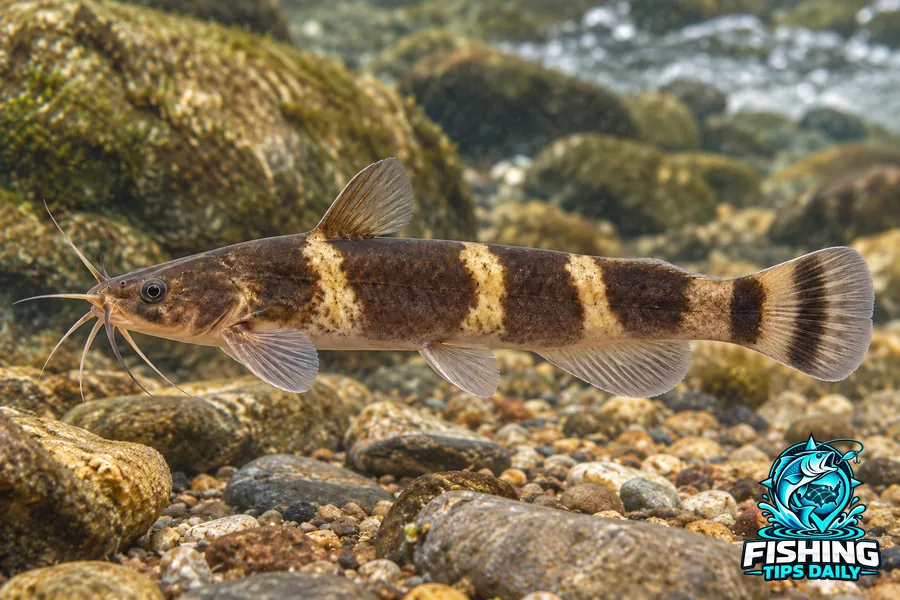
Range and Identity
Noturus fasciatus is distinguished from related madtoms through a combination of pigmentation, fin structure and body proportions. Bold pale markings behind the head and dark dorsal saddles are useful features. Color alone should still be kept with a complete view and locality.
Habitat and Behavior
Collections include shallow riffles over gravel, cobble, rubble or slate. The reported depths and current speeds describe sampled sites rather than universal habitat limits. Daytime concealment among stones is considered likely in the account but should not be presented as directly observed in every individual.
Food and Life History
The upper reference is 8.5 centimeters total length. Mature eggs were found in preserved females collected from late spring into summer. A short lifespan suggested from body size remains an inference, so it is not converted into a securely established maximum age.
Field Note
Keep observation separate from inference in a field note. A fish collected from a riffle documents habitat, while its exact daytime hiding position may require direct behavioral evidence.
All Lakes With Saddled Madtom
Browse lakes and reservoirs with documented Saddled Madtom records, listed alphabetically. Records do not establish current abundance or public access. Check the evidence and managing authority for the water you choose.
No published lakes are currently linked to this species in our confirmed records.