
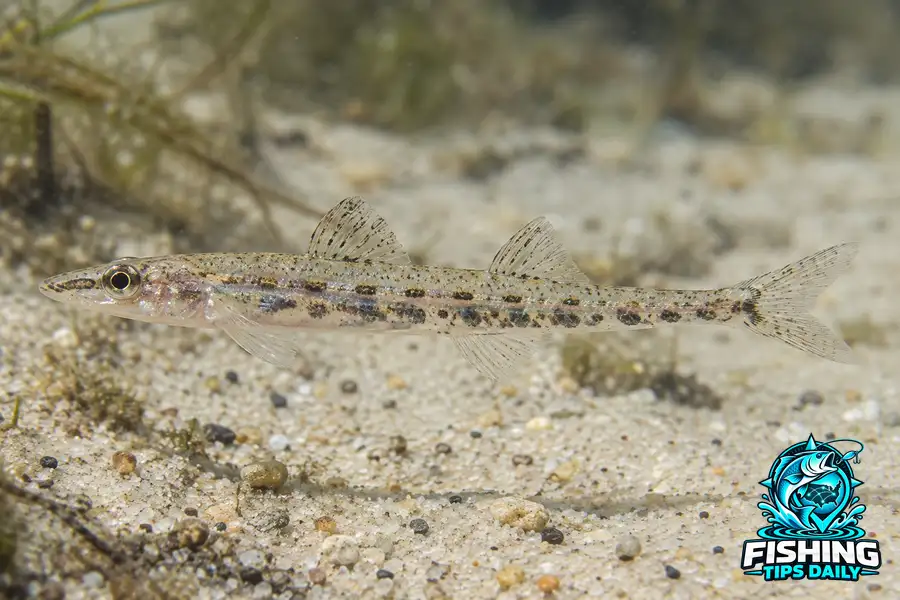
Drainage Range
The Perdido and Apalachicola systems frame the compiled distribution. This is a regional range rather than a statement that the fish occupies every Florida waterway. Keeping the particular drainage with a record is helpful when comparing similar sand darters.
Sandy Runs
Adults inhabit sandy runs in small to medium rivers. Both the bottom material and moving-water setting matter in that description. A nearby muddy backwater or a rocky riffle should not be substituted for the actual place where a fish was observed.
Length
The reference maximum is 7.7 centimeters including the tail, with a common length of 5.3 centimeters. On a fish this small, a photograph beside a scale gives useful context. Standard length, which excludes the tail fin, would be a different measurement.
Record Sand and Current
A habitat note that includes substrate and current helps distinguish a sand run from other features along the same stretch of river.
All Lakes With Florida Sand Darter
Browse lakes and reservoirs with documented Florida Sand Darter records, listed alphabetically. Records do not establish current abundance or public access. Check the evidence and managing authority for the water you choose.
No published lakes are currently linked to this species in our confirmed records.