
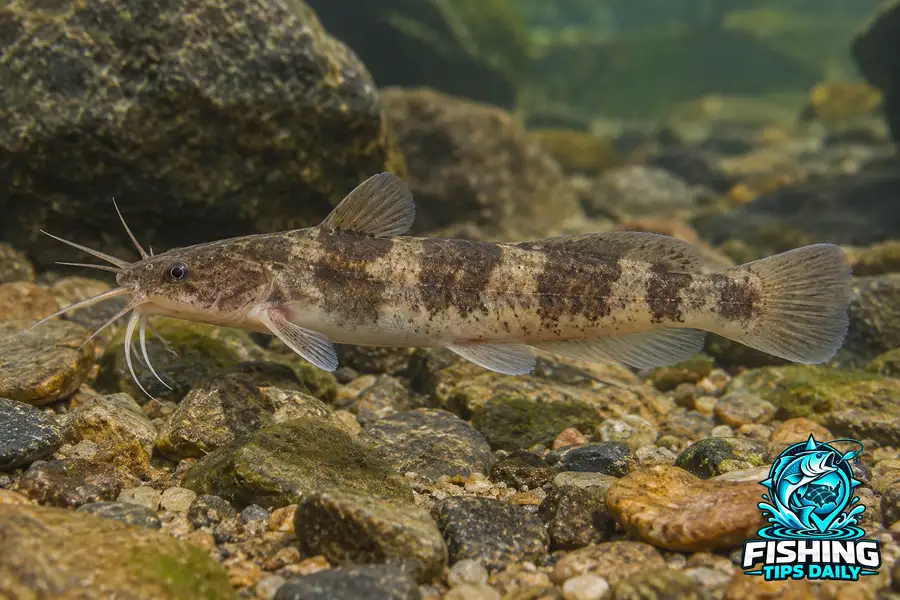
Identification
The body is relatively broad at the pectoral fins. Dark pigment occurs on the cheek, and the adipose fin is distinctly joined to the tail fin. Three evenly spaced pale and dark tail bands help distinguish it from the Saddled Madtom, whose tail bands are usually fewer and less evenly arranged.
A Recently Described Species
The formal description appeared in 2005 and compared physical characters with genetic evidence. That history matters when reading older collections: similar-looking fish were not always separated under the names used today. The number and spacing of tail bands are part of an identification, not a substitute for locality and the other characters.
Interpreting Size
The maximum of 6.5 centimeters is standard length, ending at the tail base. It should not be compared directly with a total-length measurement of another madtom. A clear lateral view showing the adipose-to-tail connection and the entire tail pattern is particularly useful for reviewing a documented specimen.
The Fin Connection Matters
Along with the tail bands, the strong connection between the adipose and caudal fins is a diagnostic feature described for Chucky Madtom.
All Lakes With Chucky Madtom
Browse lakes and reservoirs with documented Chucky Madtom records, listed alphabetically. Records do not establish current abundance or public access. Check the evidence and managing authority for the water you choose.
No published lakes are currently linked to this species in our confirmed records.