
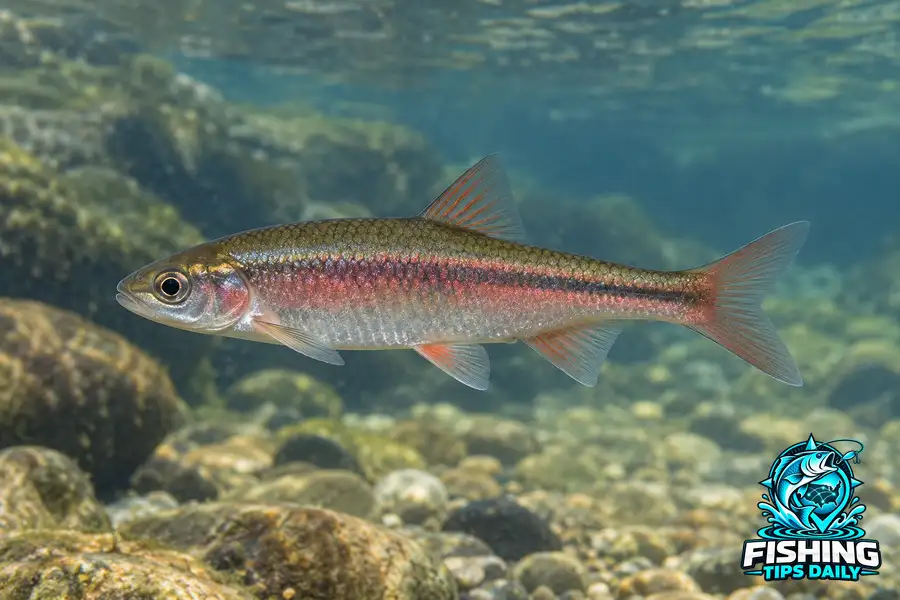
Identification
An olive upper body contrasts with silvery sides. Breeding adults can develop pink or rosy color around the cheeks and gill covers. The resemblance to other small shiners makes location and detailed identification important.
Size and Measurement
The 67-millimeter measurement comes from Manitoba material and stops at the fork of the tail. It is neither total length nor a verified maximum for the species across its entire range.
Habitat and Feeding
Carmine Shiners use flowing water with relatively clean sand and stone substrates. Insects dominate the reported diet. Fine sediment and changes in flow matter because they can alter both feeding habitat and the spaces available to small fish.
A Northern Population Is Not the Whole Species
Manitoba provides valuable measurements and conservation observations. Keeping that regional scope explicit prevents one study’s largest fish from becoming an unsupported worldwide record.
All Lakes With Carmine Shiner
Browse lakes and reservoirs with documented Carmine Shiner records, listed alphabetically. Records do not establish current abundance or public access. Check the evidence and managing authority for the water you choose.
Showing 1–2 of 2 lakes · Page 1 of 1
- Big Stone Lake Big Stone, MN
- Lake Traverse Traverse, MN