
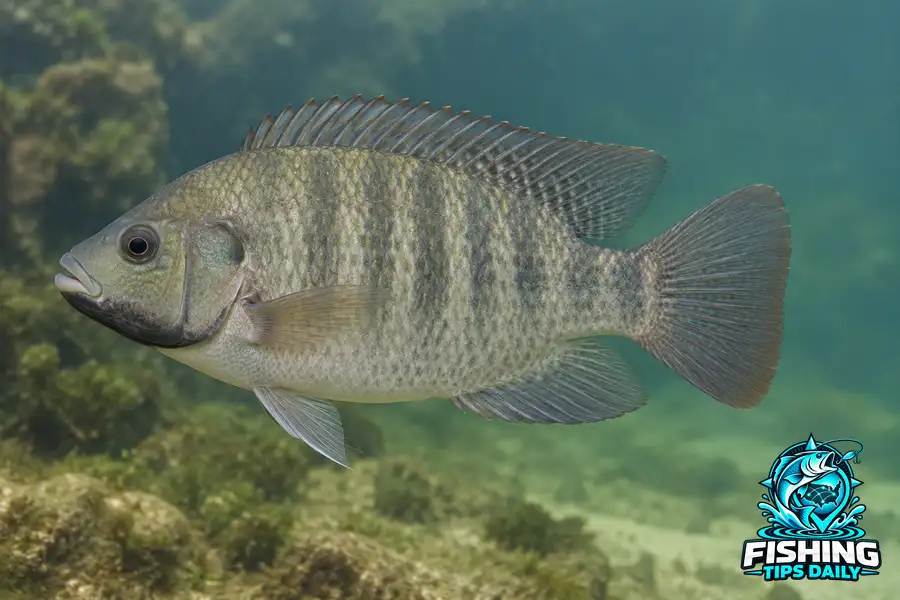
Identification and Range
A compressed body, small mouth and irregular black patches beneath the head are characteristic. Native populations occur along western Africa; introduced populations also occur in Florida. Juveniles may show a dark spot in the dorsal fin, so that mark alone does not identify the species.
Size and Weight
The reported maximum standard length is 28 cm, about 11 inches, excluding the tail fin. A study of the nominate subspecies in Benin measured fish weighing up to 286.43 g, about 10.1 ounces. That is the largest fish in that sample, not a worldwide maximum, and it was not the fish behind the maximum-length report.
Habitat and Natural Food
This tilapia tolerates substantial changes in salinity. Lagoon and estuary populations feed on organic detritus, attached growth and small aquatic organisms, including bivalves and zooplankton. A varied natural diet does not establish one best hook bait.
Fishing and Reproduction
A dependable species-specific recreational bait comparison was unavailable. The best-documented behavior is reproductive: females take an active role in courtship and preparing spawning areas, while males carry the eggs in the mouth during incubation.
A Father With a Mouthful of Eggs
Mouthbrooding keeps developing eggs with a parent rather than leaving them exposed on the bottom. In Blackchin Tilapia, the male performs this conspicuous part of parental care.
All Lakes With Blackchin Tilapia
Browse lakes and reservoirs with documented Blackchin Tilapia records, listed alphabetically. Records do not establish current abundance or public access. Check the evidence and managing authority for the water you choose.
Showing 1–1 of 1 lakes · Page 1 of 1
- Wahiawā Reservoir Honolulu, HI