
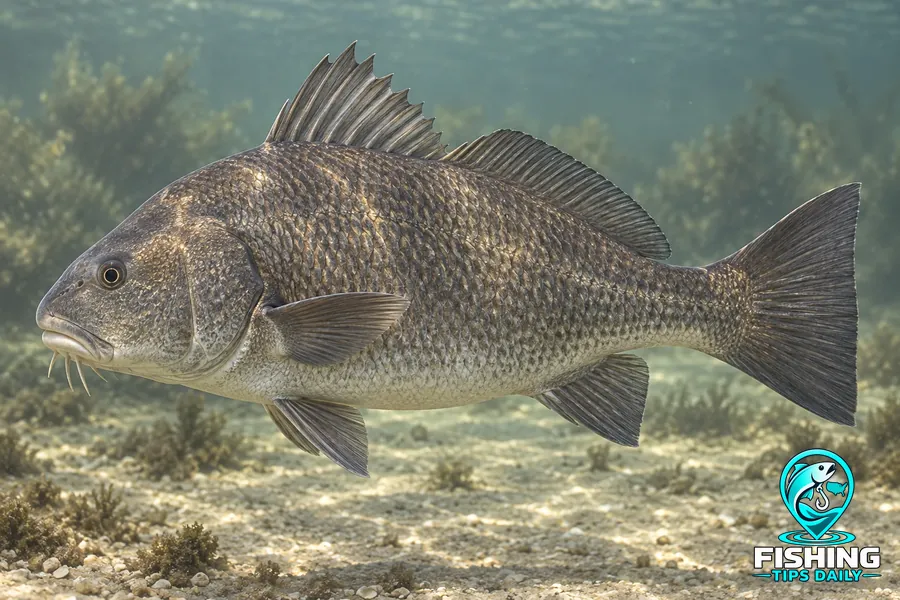
Identification
Juveniles show dark vertical bars that fade as the fish grows. Adults have a high back and a cluster of barbels under the lower jaw. Their color varies with habitat, from silvery gray to very dark.
Size and Weight
A published maximum total length of 170 cm is about 5 feet 7 inches. The Texas species account reports a largest weight of 146 pounds, exceeding the older 51.3 kg summary. These are separate reports, not paired measurements from one fish.
Habitat and Natural Food
This adaptable fish occupies muddy bays, sandy flats, passes and deeper coastal water. It roots for worms and shellfish, using barbels to locate food and throat teeth to break harder prey.
Bait and Fishing Methods
Shrimp, squid and cut fish are documented offerings. Bottom rigs keep bait in the feeding zone; tackle strength should match the fish and conditions. Large drum often gather around deeper channels and passes seasonally.
A Fish You May Hear
The sound-producing ability behind the name is especially developed in Black Drum. Schools can make audible drumming near boats, adding an unusual acoustic clue to this otherwise bottom-oriented fish.
All Lakes With Black Drum
Browse lakes and reservoirs with documented Black Drum records, listed alphabetically. Records do not establish current abundance or public access. Check the evidence and managing authority for the water you choose.
Showing 1–12 of 12 lakes · Page 1 of 1
- Big Lake Cameron, LA
- Big Mar Plaquemines, LA
- Caillou Lake Terrebonne, LA
- Calaveras Lake Bexar, TX
- Grand Lake Cameron, LA
- Lake Arthur Cameron, LA
- Lake Boudreaux Terrebonne, LA
- Lake Lery Plaquemines, LA
- Lake Mechant Terrebonne, LA
- Lake Pontchartrain St. Tammany, LA
- Lake Saint Catherine Orleans, LA
- White Lake Vermilion, LA