
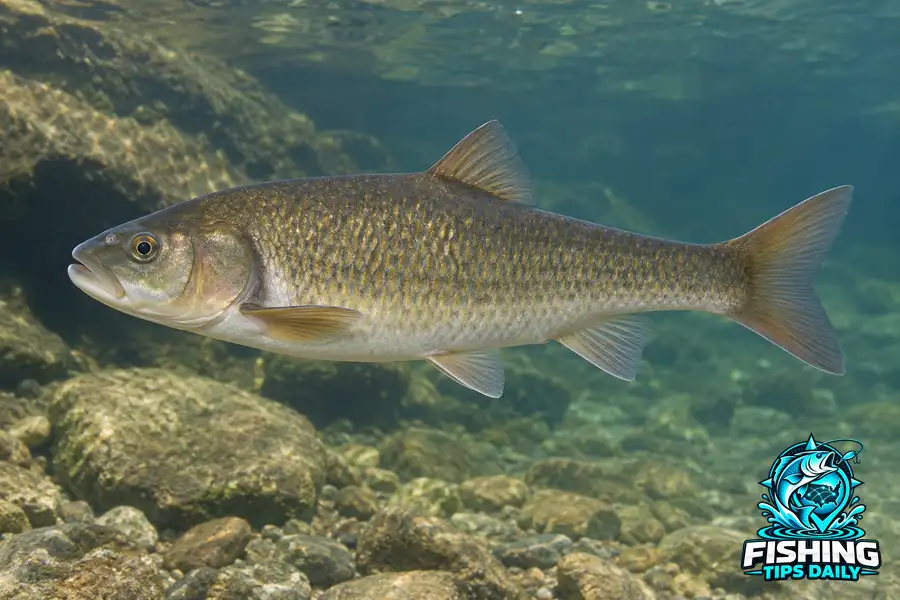
Identity and Size
Bigmouth Chub is Nocomis platyrhynchus, a different species from Bigmouth Buffalo. It occurs naturally in the New River system. The reported maximum total length is 24 cm, about 9.4 inches; a common-length summary is 15.2 cm. No verified maximum body weight was found.
Habitat and Natural Food
Rocky pools and runs of creeks and smaller rivers form its broader habitat. Field observations in the New River also found fish in riffles and adjacent runs during late summer. A feeding study found mostly animal material, particularly insect remains and caddisfly larvae, with a smaller contribution from green algae.
Spawning Behavior
Males move pebbles to build gravel mounds with a spawning trough. Studies describe nest construction in areas with available gravel and flowing water, although suitable depth and current differ between rivers. These structures are functional nests, not random piles of stones.
Observation and Fishing Context
A chub mound can support spawning activity by several kinds of minnows. Watching from the bank or moving carefully around the structure preserves that activity. A species-specific recreational bait method is not established here, and a fish tending a nest is best left undisturbed.
A Nest That Serves the Neighborhood
A male’s pebble-moving work creates a spawning site for its own species and can attract other native minnows. Keeping these mounds intact protects a small but important piece of the stream’s reproductive habitat.
All Lakes With Bigmouth Chub
Browse lakes and reservoirs with documented Bigmouth Chub records, listed alphabetically. Records do not establish current abundance or public access. Check the evidence and managing authority for the water you choose.
No published lakes are currently linked to this species in our confirmed records.