
Identification
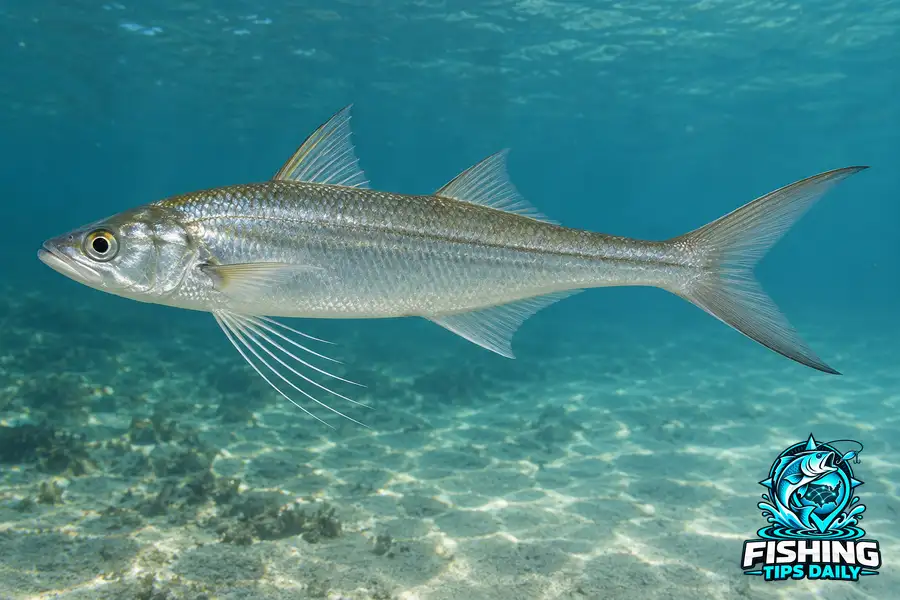
Polydactylus virginicus belongs to the threadfins. The separated lower pectoral rays are the feature to notice. Barbu should not be confused with the freshwater Barbel: their similar-sounding names refer to unrelated fishes with very different habitats.
Size and Weight
The reported maximum total length is 33 cm, approximately 13 inches. A dependable maximum weight was not established. Large size and weight records for other threadfins do not describe this species.
Habitat and Natural Food
Coastal sand and mud bottoms, estuaries and mangroves provide habitat. Young fish can gather near river mouths. Feeding takes place mainly at night, with crustaceans most important in the documented diet; worms and other small organisms also occur.
Reproduction and Fishery Context
The occurrence of juveniles through much of the year suggests an extended spawning season. That is a biological inference rather than proof of spawning on every date. The species occurs in fisheries, but no dependable preferred hook bait was established for this account.
Threads Below the Fins
The separated rays beneath the pectoral fins are a defining part of the threadfin body plan. They make Barbu recognizable even when its otherwise silvery appearance resembles many neighboring coastal fishes.
All Lakes With Barbu
Browse lakes and reservoirs with documented Barbu records, listed alphabetically. Records do not establish current abundance or public access. Check the evidence and managing authority for the water you choose.
No published lakes are currently linked to this species in our confirmed records.