
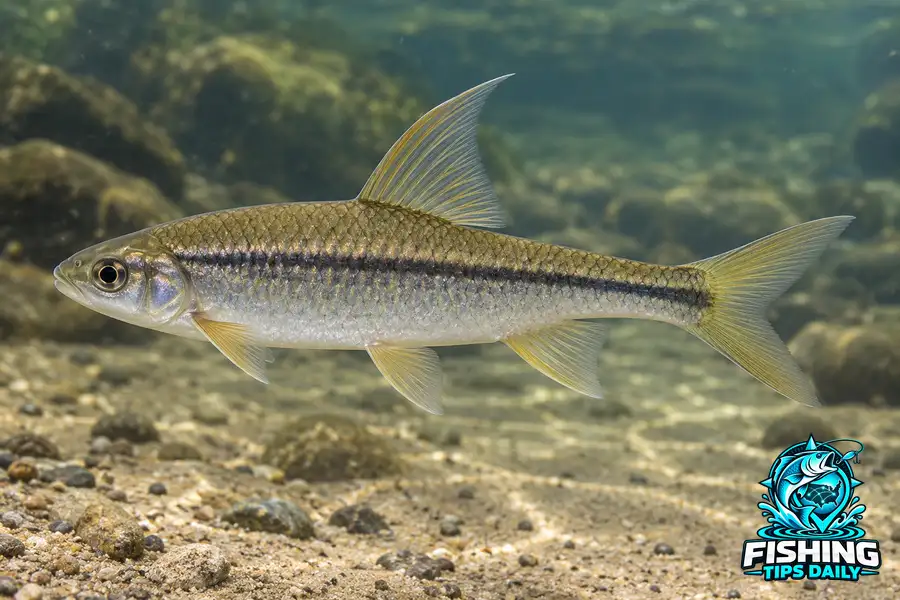
Identification
The enlarged dorsal fin and placement of its black blotch are useful features. Diamond-shaped scales show on the upper sides, and the mouth sits slightly below the end of the snout. It should not be confused with Bandfin Shiner, whose name and fin markings sound similar.
Size and Weight
The reported maximum total length is 10 cm, approximately 3.9 inches. That is an upper species figure, not an expected size for every river sample. A dependable maximum weight was not established.
Habitat and Distribution
Sandy river runs provide habitat within several southeastern drainages. Its distribution spans portions of both Atlantic- and Gulf-draining systems. Being present within a drainage does not establish occupancy of every reservoir or tributary in it.
Natural-History Focus
Identification, size and habitat are more firmly documented than a species-specific bait recommendation in the material checked. A general minnow prey list is therefore not presented as a verified diet. The dorsal-fin marking remains a useful detail for comparing a photographed fish with similar shiners.
The Banner’s Marking Matters
The dark mark is near the front of the enlarged fin, rather than an interchangeable stripe anywhere on it. Its position adds a practical identification clue to the fin’s overall shape and the fish’s sandy-river habitat.
All Lakes With Bannerfin Shiner
Browse lakes and reservoirs with documented Bannerfin Shiner records, listed alphabetically. Records do not establish current abundance or public access. Check the evidence and managing authority for the water you choose.
No published lakes are currently linked to this species in our confirmed records.